Design philosophy

Modular. Bolted.
Built to be serviced.

Every Sorian crane is designed so that it can be taken apart again. Nothing structural is welded into a lump you can't inspect, replace or move. That is deliberate, and it is the difference between a crane that costs you money in year ten and one that doesn't.

A lot of cranes sold in Australia are built to be cheap on the day: columns welded to base plates, arms welded to pivots, end carriages welded to girders. They go in fine. The problem shows up later, when an inspector needs to see inside a connection, a bearing needs changing, or the business moves buildings and the crane doesn't come with it.

We design the other way around. Every major connection on a Sorian crane is a bolted joint: column to base, arm to pivot, girder to end carriage, hoist to trolley, runway rail to bracket. Bolted means it can be unbolted. Unbolted means it can be inspected, replaced, re-spanned or relocated by any competent crew, without hot work in your building.
Four rules

How every Sorian design is put together.

01

Bolted, not welded

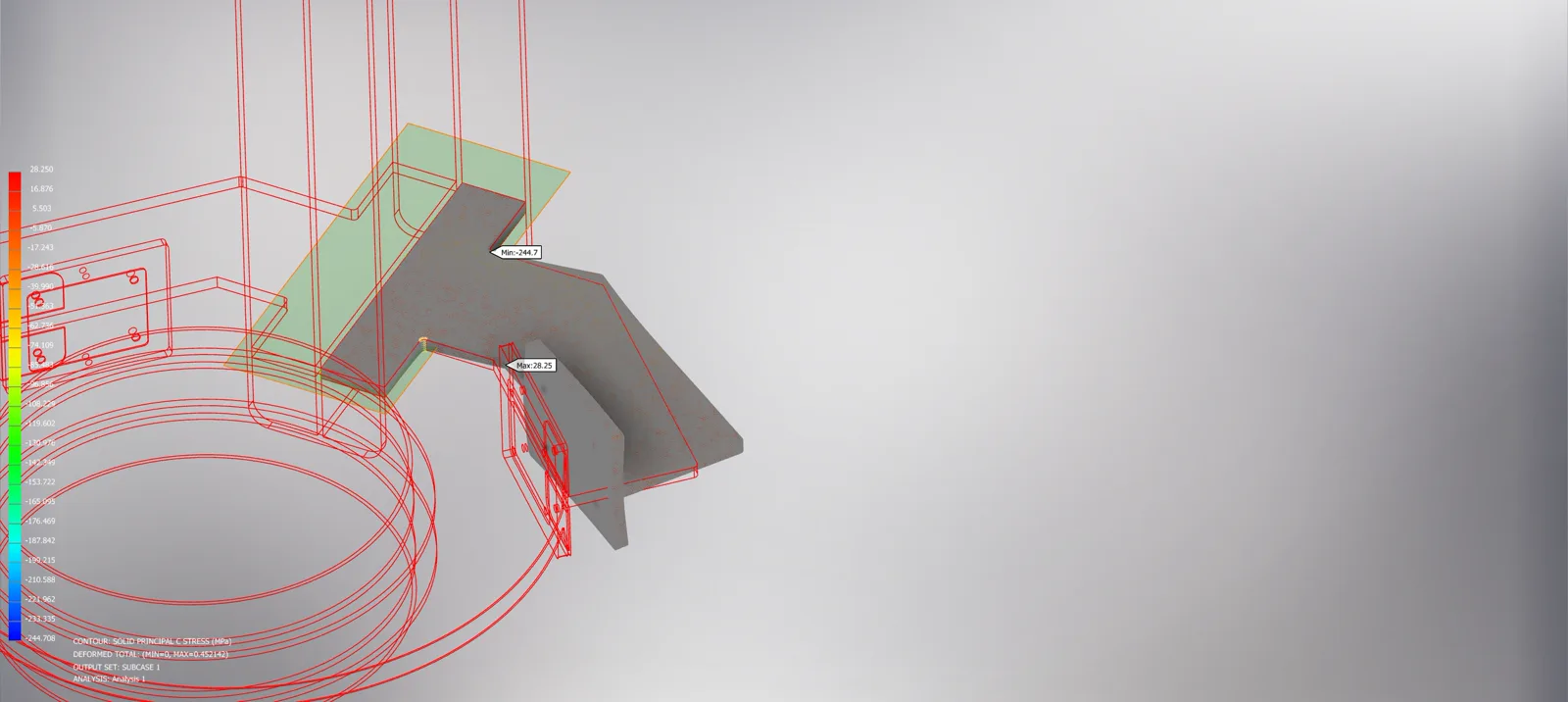
Structural members are fabricated as discrete modules and joined with engineered bolted connections. Any module can be removed and inspected, repaired or replaced on its own. The crane that goes into your building can also come out of it.

02

Designed for the installer

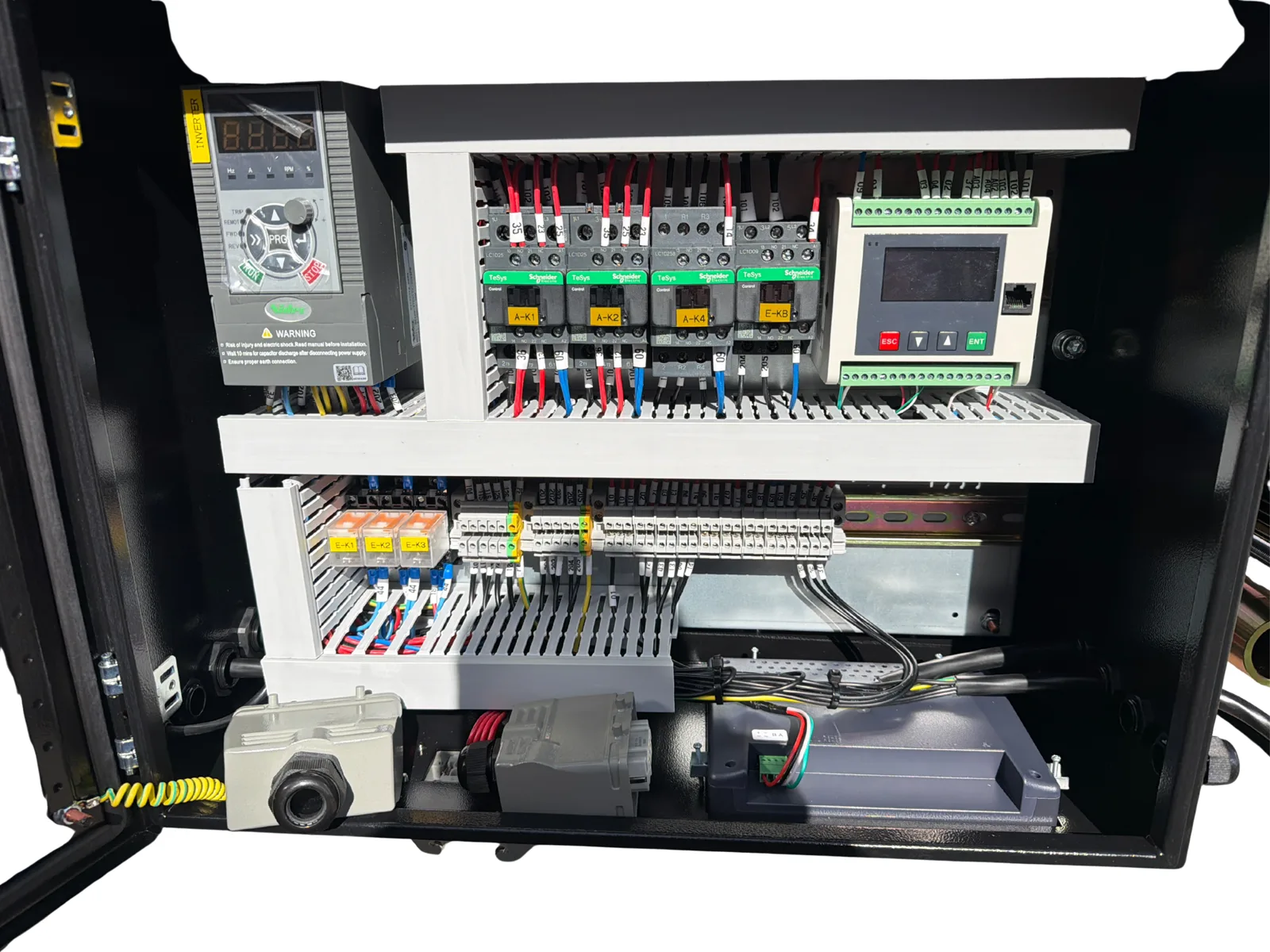
We design with the install crew in the room. Lifting points, bolt access, match-marked parts and pre-fitted electrics mean fewer hours on your floor, smaller lifting equipment, less disruption and a lower installed price. Time saved on site is money saved by the client.

03

DTI washers on structural bolts

Direct tension indicator washers are used throughout our structural connections. The washer physically shows when the bolt is at the correct tension, so the installer isn't relying on a torque wrench setting alone and the inspector can verify it visually at every annual and 10-yearly inspection.

04

Parts you can actually get

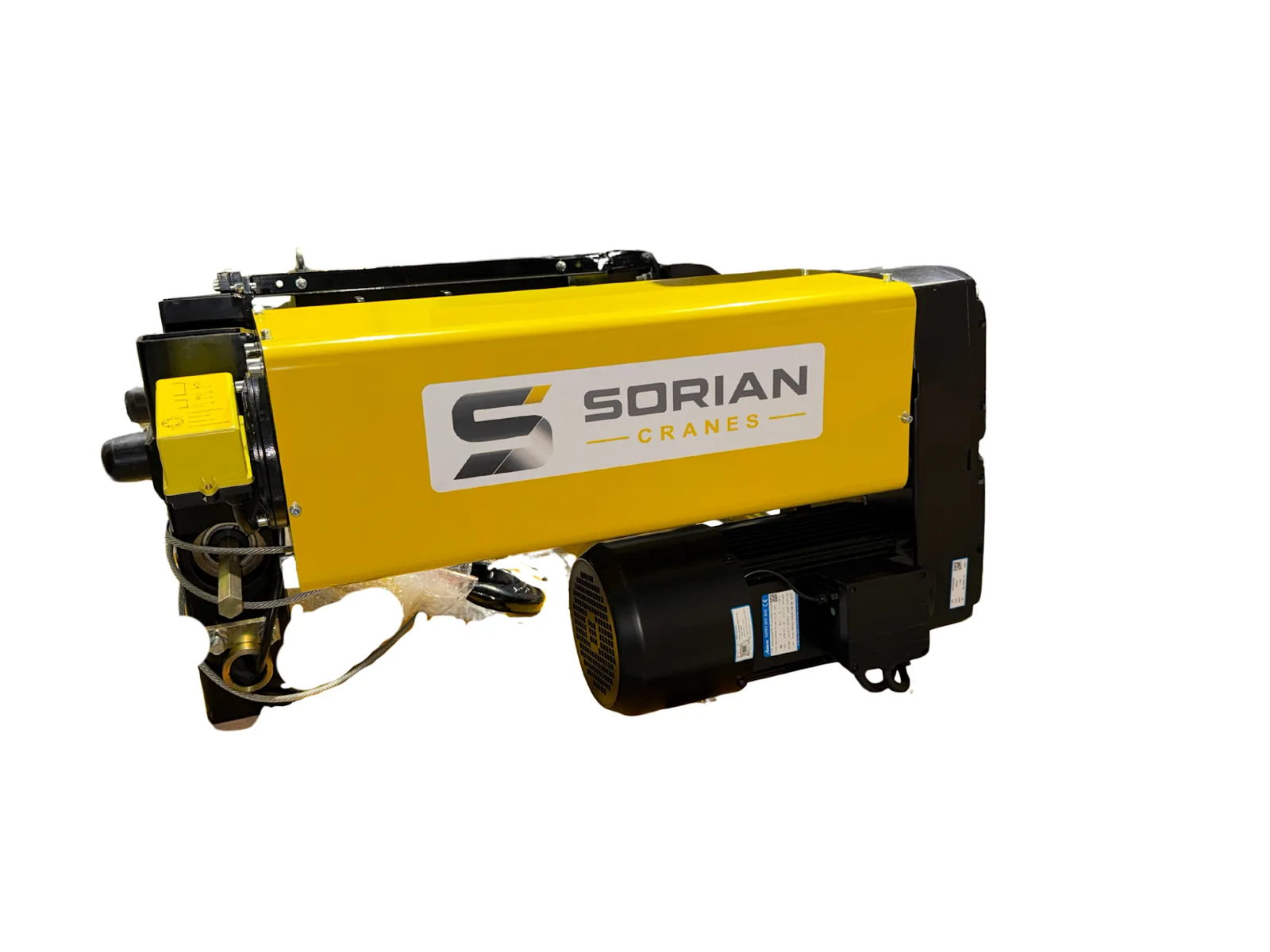
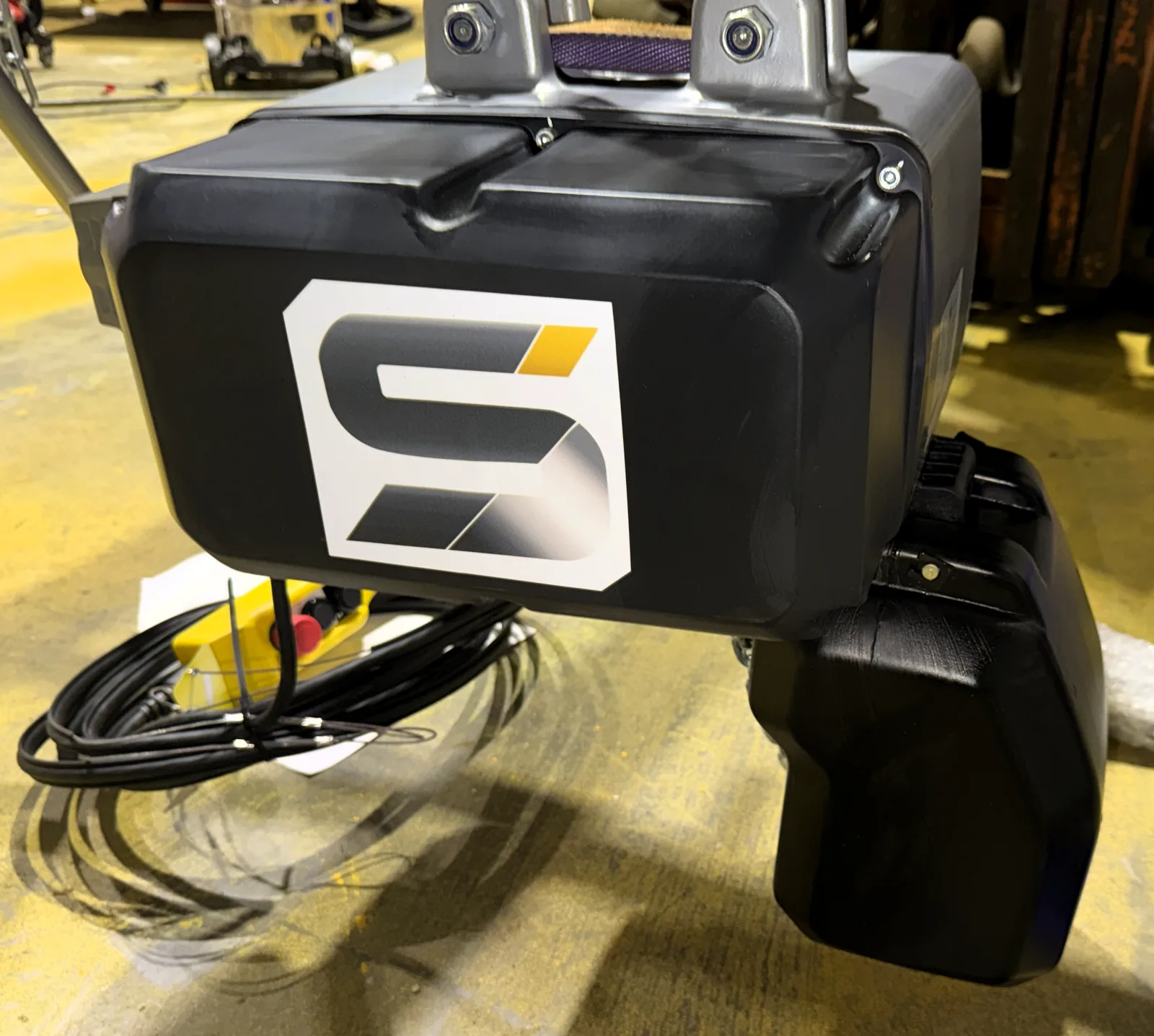
Our hoists are built on the same platform and production line as thousands of hoists already working in Australia. Brakes, contactors, limits, chain, rope and pendants are stocked locally, and available through Sorian at highly competitive rates. No waiting on an overseas OEM.

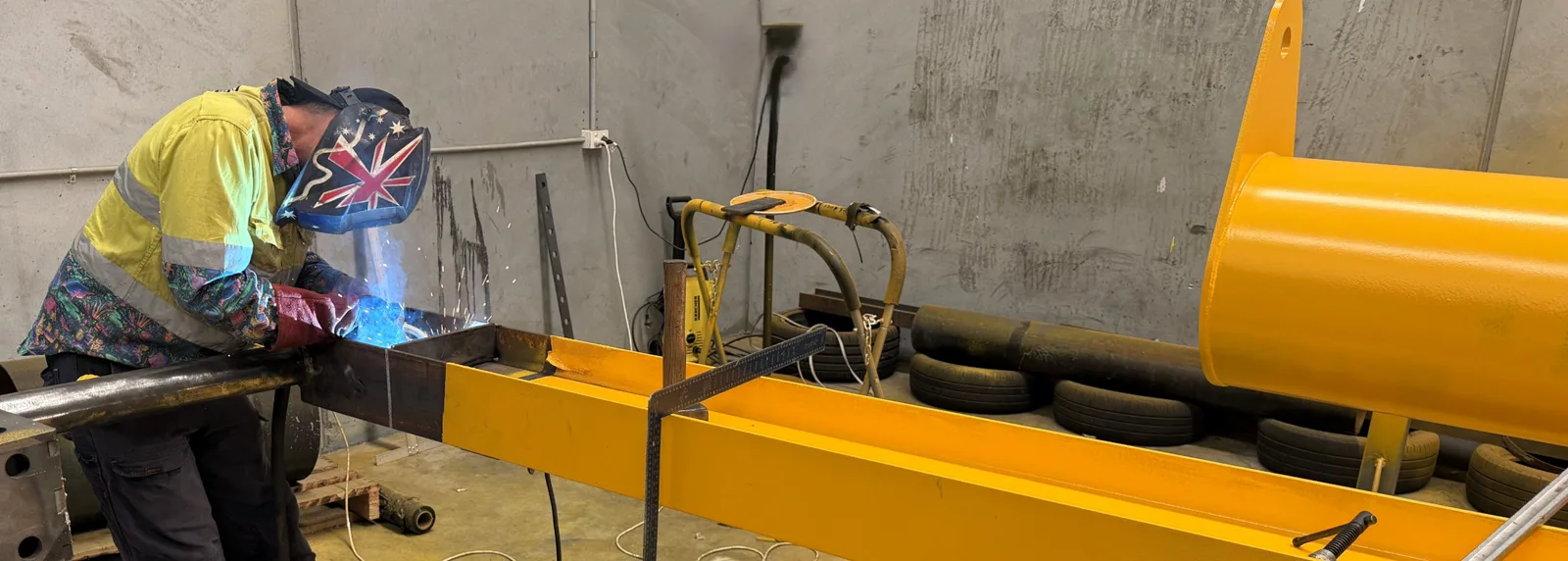
In the workshop and on site

What that looks like in steel.

A note on what you don't see here. Much of our work is for clients whose sites and processes are confidential, so for privacy reasons a lot of it can't be shown on this website. If you'd like to see examples relevant to your industry, ask and we'll share what we're able to under NDA.

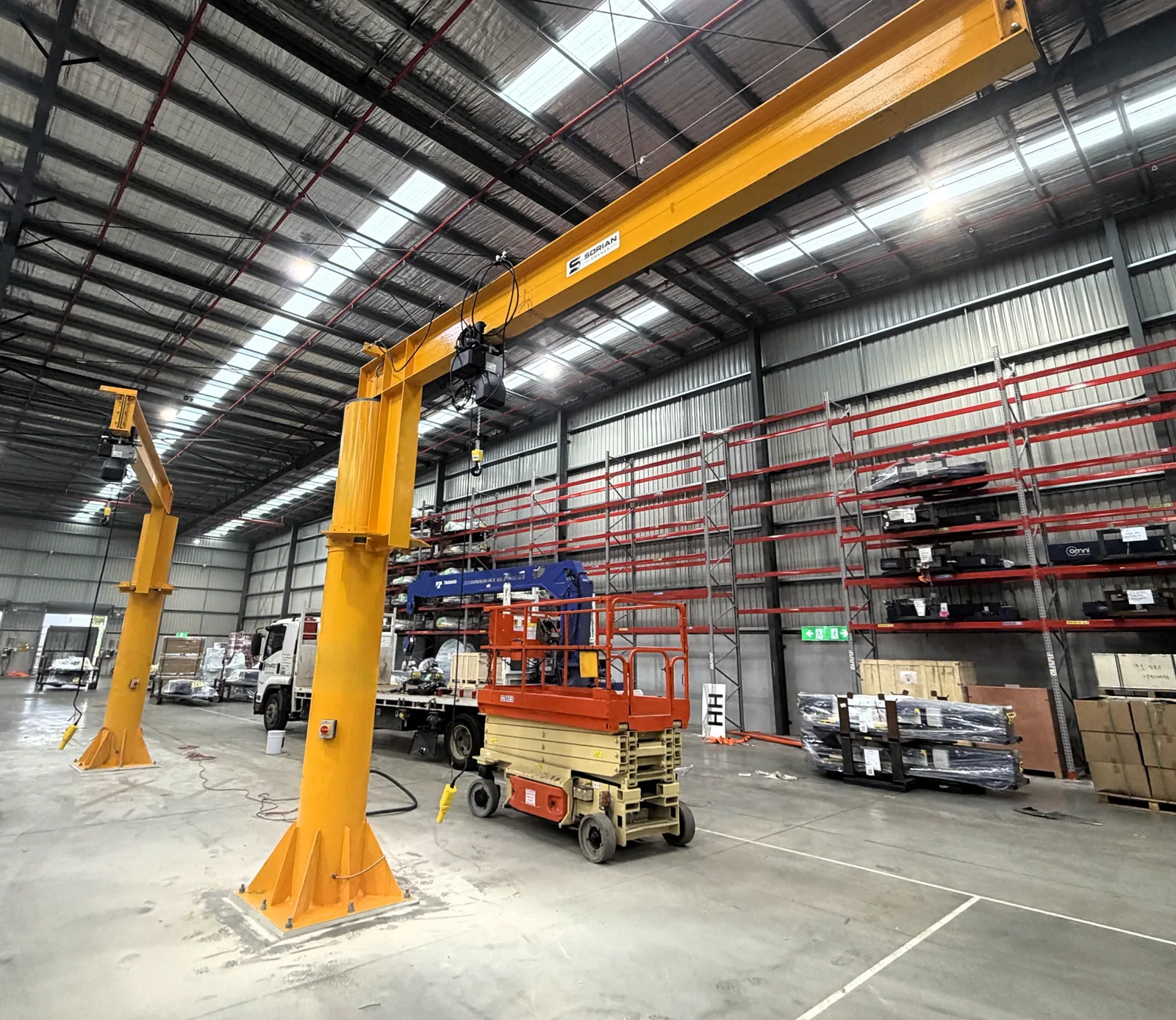
Jib crane, all the way round

Every connection on a Sorian jib is a bolted one.

Top pivot, over-braced arm, column and base plate are all bolted modules. The arm can be removed for transport or replaced for a longer reach without touching the column.

Why this matters to the owner

  • Inspection. AS 2550.1 annual inspections and the 10-yearly major inspection need access to connections. A bolted joint can be opened, checked and re-tensioned. A welded one gets a visual and a guess.
  • Repair. Forklift hits a column, a bearing wears, a girder gets overloaded: replace the module, not the crane.
  • Change. Longer arm, higher hook height, new span, new building. Unbolt, modify, re-bolt, re-certify.
  • Resale. A crane that can be dismantled and reinstalled holds its value. One that has to be cut out doesn't.

This is how we design jib cranes, overhead bridge cranes, gantry cranes and workstation systems, and it carries through to the hoists and spare parts we supply.

Want to see the GA drawing before you commit?

Send through your application and we'll come back with a general arrangement showing exactly what bolts to what, plus a fixed price.

Request a quote →